Loading the network…
Existentialism & Cultural Critique
Friedrich Nietzsche
1844 – 1900
“That which does not kill us makes us stronger.”
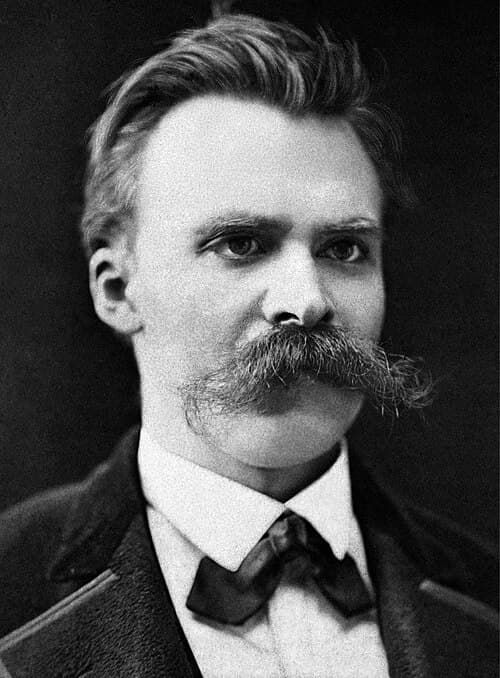
The philosopher with the hammer. Nietzsche diagnosed the death of God and the coming of nihilism, then prescribed the Übermensch as humanity's creative response.
Biography
Friedrich Nietzsche (1844–1900) was a German philologist-turned-philosopher who became one of the most influential and provocative thinkers of the modern era.
His mature masterpiece, Thus Spoke Zarathustra, announced the death of God — not as a triumphant atheism but as a cultural diagnosis of potentially catastrophic nihilism. If God is dead, the entire edifice of Western morality collapses.
In On the Genealogy of Morality, he performed a genealogical critique: our moral values have historical origins in power and resentment, not in transcendent truth.
Important Works
Thus Spoke Zarathustra
1883The death of God, the Eternal Return, and the vision of the Übermensch in poetic prose.
Beyond Good and Evil
1886A critique of past philosophers and a call for new, life-affirming values.
On the Genealogy of Morality
1887The historical origins of guilt, bad conscience, and slave morality.
Key Takeaways
- God is dead: the foundations of Western morality have collapsed.
- Will to power: the fundamental drive is toward self-overcoming and creative expression.
- Perspectivism: there are no facts, only interpretations.
- The Eternal Return: amor fati — love your fate and affirm all of life.
- Slave morality inverts master morality; resentment is the engine of 'good' and 'evil'.