Loading the network…
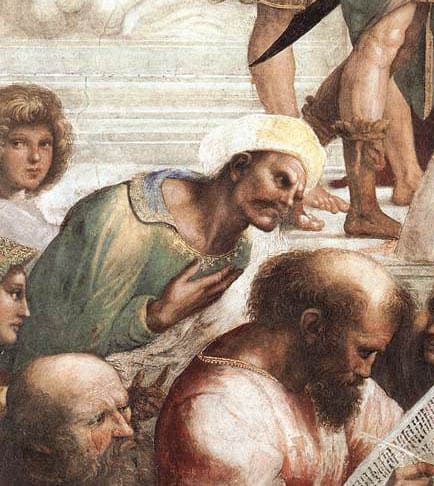
Islamic Philosophy & Aristotelianism
Averroes
1126 – 1198
“Knowledge is the conformity of the object and the intellect.”
The great Arab commentator who rescued Aristotle for medieval Europe. Averroes' meticulous commentaries on the Aristotelian corpus sparked the Scholastic revolution and deeply unsettled Christian and Jewish theologians alike.
Biography
Ibn Rushd, known in the Latin West as Averroes (1126–1198), was an Andalusian polymath — physician, jurist, and the most systematic Islamic philosopher of the medieval period. Born in Córdoba, he served as court physician to the Almohad caliphs.
His comprehensive commentaries on nearly the entire Aristotelian corpus earned him the title The Commentator in medieval European philosophy. When Latin translations of his work arrived in the thirteenth century, they reignited the study of Aristotle throughout European universities and directly provoked the great Scholastic syntheses of Albert the Great and Thomas Aquinas.
In the Incoherence of the Incoherence, he systematically refuted al-Ghazali's attack on philosophy. He argued for the eternity of the world against creatio ex nihilo and for a doctrine of the unity of the Active Intellect — positions condemned by both Christian and Islamic authorities.
Important Works
Commentaries on Aristotle
1180Short, middle, and long commentaries covering the entire Aristotelian corpus, authoritative for centuries.
The Incoherence of the Incoherence
1180A systematic rebuttal of al-Ghazali's attack on philosophy, defending reason's autonomy.
The Decisive Treatise
1179A legal argument that philosophy is obligatory for qualified Muslims and compatible with revelation.
Key Takeaways
- Philosophy and revelation address the same truth at different levels of demonstration and persuasion.
- The Active Intellect is a single, universal, and immortal intellect shared by all humans.
- The world is eternal — creation ex nihilo contradicts Aristotle's physics and metaphysics.
- Al-Ghazali's attacks on philosophy rest on misreadings of Aristotle; philosophy is self-sufficient.
- His Latin commentaries were the proximate cause of the Scholastic rediscovery of Aristotle.